Kathakali in Varkala
Imagine a warm tropical evening on the dramatic heights of the Varkala Cliff. As the sun dips below the horizon, casting amber hues across the vast Arabian Sea and the soft sands of Papanasam Beach, a rhythmic, thumping pulse begins to echo through the salty air. This is the heartbeat of Kerala—not just the waves, but the powerful, ancient sounds of the Chenda drum calling you to witness Kathakali, the crown jewel of Kerala traditional dance-drama.

Quick facts
To get you primed for your first performance, here is a snapshot of this classical art form:
Age of the Art: Over 400 years old, originating in Kerala during the 17th century.
The Name: Katha means "story," and Kali means "play" or "performance."
Total Expression: It is a "total art" (Vidhya) combining literature, music, painting (makeup), acting, and dance.
The Colors Speak: The vibrant, heavy makeup is color-coded. Green (Pacha) represents noble heroes, while black (Kari) and red (Thadi) depict demons and villains.
Intense Training: Professional Kathakali performers undergo up to 8 to 10 years of rigorous physical and mental training, beginning in early childhood.
No Spoken Words: The actors maintain absolute silence. The story is sung by vocalists while the actors translate every lyric using 24 basic Mudras (hand gestures) and Navarasas (nine facial expressions).
Origins and history
Kathakali emerged in the southwestern state of Kerala during a period of rich cultural renaissance. It evolved from older temple performance arts like Krishnanattam (dance dramas dedicated to Lord Krishna) and Ramanattam (plays based on the Ramayana). In the 17th century, the Raja of Kottarakkara, frustrated when a neighboring king refused to send his troupe for a performance, decided to create a new, highly accessible form of dance-drama written in Malayalam rather than Sanskrit.
Over the centuries, Kathakali moved from royal courts and temple sanctuaries directly into the hearts of local communities. Today, it stands as one of India's nine recognized classical dances. For travelers visiting places to visit in Varkala, seeing this historical art form performed in an intimate local setting provides an invaluable link to Kerala's rich royal and spiritual history.
Performance elements
To truly appreciate a Kathakali performance, it helps to understand the three core elements that work in perfect harmony to bring the stage to life.
Costume and makeup
The preparation for Kathakali is an art form in itself. Known as Aharya Abhinaya, the makeup process takes several hours and uses completely natural minerals, stones, and coconut oil.
Pacha (Green): Representing divine and noble characters like Arjuna, Rama, or King Nala. A white frame made of rice paste and lime called Chutti is applied to the jawline to accentuate facial movements.
Kathi (Knife): Green faces with red streaks and small white knobs on the nose and forehead, denoting powerful characters who have a fatal flaw of pride or lust (like Ravana).
Thadi (Beard): Can be Red (vicious, destructive characters), White (pious beings like Hanuman), or Black (primitive forest dwellers).
Minukku (Polished): Soft warm tones used for female characters (historically played by men), sages, and messengers, reflecting gentleness and spirituality.
The costumes are incredibly heavy and elaborate, featuring billowing skirts, massive wooden breastplates, and towering, intricately carved headdresses (Kireedam) adorned with mirrors and peacock feathers.
Music & instruments
The narrative spine of Kathakali is carried by its musicians. Standing at the back of the stage, two vocalists sing the Attakkatha (the script of the play) in a classical style known as Sopanam Sangeetham.
The music is driven by a powerful percussion ensemble. The lead drum is the vertical Chenda, producing sharp, thunderous beats that signal battle and fury. The Maddalam, a horizontal drum played with both hands, provides a softer, deeper resonance for romantic and emotional scenes. Accompanying them are the heavy bronze cymbals (Elathalam) and a metal gong (Chengila), which keep the rhythm and guide the actors' pacing.
Movement
Without saying a single word, a Kathakali actor can describe a towering forest, a buzzing bee, or a furious battle. This is achieved through two extraordinary physical languages:
Mudras (Hand Gestures): A highly sophisticated sign language comprising 24 basic gestures that can be combined to form hundreds of words and complete sentences.
Abhinaya (Facial Expression): The actors train for hours daily to isolate and control their facial muscles. Through Netra Abhinaya (eye expressions), they can dart, roll, and vibrate their eyes to convey complex emotions. They master the Navarasas—the nine fundamental human emotions: Shringara (love), Hasya (humor), Karuna (compassion), Raudra (anger), Veera (valor), Bhayanaka (fear), Beebhatsa (disgust), Adbhuta (wonder), and Shanta (peace).
Mythology and repertoire
The stories enacted in Kathakali are deeply rooted in the great Indian epics: the Ramayana, the Mahabharata, and the Bhagavata Purana. These plays are not mere entertainment; they are moral struggles between good and evil, dharma and adharma.
Some of the most popular plays you might see during your Varkala beach vacation include:
Duryodhana Vadham (The Slaying of Duryodhana), a high-intensity climax from the Mahabharata.
Kalyanasougandhikam (The Flower of Good Fortune), where the heroic Bhima searches for a mythical flower to please his wife, Draupadi, and encounters his brother, the monkey-god Hanuman.
Poothanamoksham (The Salvation of Poothana), a poignant story of a demoness sent to nurse the infant Krishna with poisoned milk, who is ultimately redeemed by his divine touch.
Famous artists
Kathakali has been kept alive through the dedication of legendary maestros who have spent their lives perfecting this grueling discipline. Some of the most celebrated regional and national names include:
Kalamandalam Gopi: The undisputed living legend of Kathakali, world-renowned for his portrayal of romantic and heroic Pacha roles.
Kalamandalam Ramachandran Unnithan: Famous for his incredibly expressive, raw energy in portraying fierce, dark characters (Thadi and Kathi).
Kottakkal Sivaraman: A pioneer who revolutionized the portrayal of female characters (Minukku) with deep emotional sensitivity.
Kalamandalam Krishnan Nair: Widely regarded as one of the most versatile actors of the 20th century, master of all character types.
Guru Gopinath: A visionary who helped popularize classical Keralan dance forms globally.
Kalamandalam Vasu Pisharody: Highly respected teacher and performer known for his strict adherence to classical grammar and style.
To catch regional performances and book local tickets, keep an eye on these Varkala-specific artists and venue networks:
[Varkala Cultural Centre — verify contact] (Ideally located near the North Cliff, hosting daily seasonal shows).
[Papanasam Kathakali Club — verify contact] (A community-led cooperative linking visiting tourists with freelance artists).
schools and local contacts
For those wishing to dive deeper, professional training centers and cultural departments are readily accessible from Varkala:
Kerala Kalamandalam (Cheruthuruthy, Thrissur): The premier state university for classical performing arts, founded by the poet Vallathol Narayana Menon in 1930. It is the ultimate temple of learning for Kathakali.
Margi (Thiruvananthapuram): Located just an hour's train ride south of Varkala, this prestigious school offers regular, authentic temple-style performances and archives.
Varkala Cultural Centre (Varkala Cliff): The primary local point of contact for daily shows, makeup demonstrations, and brief introductory workshops during the peak tourist season (October to March).
Where to watch in/near Varkala
If you are eager to add a cultural highlight to your beach getaway, here are the top places to watch a show:
Varkala Cultural Centre: Situated right near the bustling North Cliff, this intimate, rustic indoor theater is the most convenient place for tourists. It offers daily evening shows featuring the fascinating makeup process and the main performance.
Janardhanaswamy Temple: This ancient 2,000-year-old temple overlooks Papanasam Beach. During its annual ten-day Arattu festival (usually held in March), the temple grounds come alive with traditional, all-night Kathakali performances under the glow of heavy oil lamps.
Margi Theatre (Thiruvananthapuram): For a highly classical, non-tourist-centric show, take a day trip to neighboring Trivandrum to witness full-length plays organized by Margi.
Varkala itineraries
To help you blend sun, sand, and high culture seamlessly, here is how you can weave a classical dance in Varkala into your holiday plans:
1-Day Cultural Snapshot
Morning: Early morning yoga on the quiet South Cliff, followed by a swim in the sacred waters of Papanasam Beach.
Afternoon: Enjoy a traditional Kerala Sadya lunch (served on a banana leaf) at a cliffside cafe, then explore the historic Janardhanaswamy Temple.
Evening (5:00 PM - 8:00 PM): Head to the Varkala Cultural Centre to watch the Kathakali artists apply their intricate makeup, followed by the expressive 1-hour performance.
Night: Candlelit dinner overlooking the ocean on the main Varkala Cliff.
3-Day Coastal & Cultural Explorer
Day 1 (The Cliff & The Culture): Settle into your cliffside resort. Spend the day surfing or relaxing. At 5:00 PM, head to the Varkala Cultural Centre for your introduction to Kathakali.
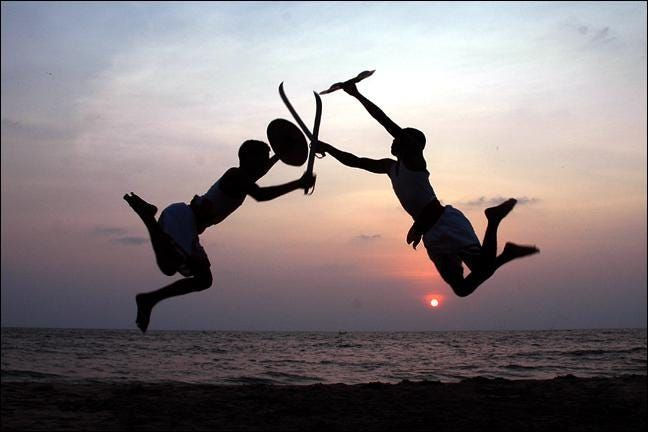
Day 2 (Backwaters & Martial Arts): Take an afternoon canoe tour of the nearby Kappil backwaters. In the evening, watch a thrilling Kalaripayattu (ancient martial arts) demonstration, which is often held in the same cultural centers.
Day 3 (Spiritual Heritage): Visit the Sivagiri Mutt, the final resting place of the social reformer Sree Narayana Guru, followed by sunset photos near the black sand shores of Black Beach.
5-Day Immersive Varkala Travel Itinerary
Day 1: Arrival, beach relaxation, and a sunset walk along the red cliffs.
Day 2: Full-day wellness experience including Ayurvedic massage and consultation.
Day 3: The Ultimate Cultural Day. Book a private morning mudra/makeup workshop at a local art school. In the evening, attend a live Kathakali show.
Day 4: Day trip to Thiruvananthapuram (Trivandrum) to explore the majestic Padmanabhaswamy Temple, local museums, and an evening performance at Margi Theatre.
Day 5: Coastal trekking from Varkala to Kappil Beach, concluding your trip with a beachfront seafood dinner.
Visitor experience & etiquette
For travelers unfamiliar with Indian classical arts, attending a Kathakali show is incredibly rewarding if you follow a few basic guidelines:
Arrive Early for the Makeup: The performance technically begins long before the curtain rises. Show up at 5:00 PM to watch the actors lie flat on the floor as the painters meticulously apply the Chutti (rice-paste frames). It is a silent, meditative process that sets the mood.
Dress Respectfully: While Varkala is a relaxed beach town where beachwear is common, the cultural center is a space of traditional art. Wear clothing that covers your shoulders and knees. Loose-fitting linen pants and a t-shirt are ideal.
Remove Your Shoes: You will likely be asked to leave your footwear at the entrance of the theater space as a sign of respect.
Switch Off Camera Flashes: You are welcome to take photos but avoid using a flash during the performance. The intense light can startle the actors, who rely heavily on subtle eye movements and sightlines.
Understand the "Slow" Pace: Kathakali is not a fast-paced modern dance. It is stylized, deliberate, and theatrical. Relax, let go of your rush, and enjoy the minute movements of the fingers, cheeks, and eyes.
Workshops and hands-on options
If watching the performance leaves you inspired, Varkala offers unique opportunities to get hands-on:
Makeup Workshops: You can book an hour-long session where a master artist demonstrates how the natural pigments are ground and applied. You can even opt to have a small, simplified version of the traditional eye-makeup or patterns applied to your own face.
Mudra & Expression Classes: Perfect for theater enthusiasts, yoga practitioners, and dancers. Local instructors can teach you the basic 24 Mudras (hand gestures) and show you the rigorous eye-rolling exercises used by the performers to train their facial muscles.
How to Book: Inquire directly with the staff at the Varkala Cultural Centre or through your resort front desk. These are best booked at least 24 hours in advance.
Why it matters for Varkala visitors
It is easy to spend your entire holiday in Varkala hopping between seaside cafes, surf schools, and yoga mats. However, seeking out Kathakali connects you deeply to the community hosting you. It transforms your beach vacation into an authentic cultural exchange. By buying a ticket, you are directly supporting local artists, families, and a centuries-old lineage of craftsmen, makeup masters, and musicians who keep this fragile, beautiful heritage alive in a rapidly modernizing world.
Any other significance for Varkala
Beyond being a scenic coastal town, Varkala holds immense spiritual significance in Kerala, often referred to as Dakshina Kashi (the Varanasi of the South). The sacred spring waters of Papanasam Beach are believed to wash away sins, making Varkala a major pilgrimage hub.
Because classical art in Kerala was historically born as an offering to the deities, performing Kathakali within the vicinity of the ancient Janardhanaswamy Temple serves as a vital bridge between the physical and the spiritual. It is believed that hosting these epic dramas on sacred ground invokes positive energy and divine blessings over the entire coastal region, protecting the fishermen, locals, and travelers alike.
Photo suggestions
To capture the essence of your cultural evening on camera, keep these framing ideas in mind:
The Silent Transformation: Capture a candid, natural-light shot of an artist lying down on a woven mat, eyes closed, as the white rice paste is delicately layered onto their jaw.
Alt-text suggestion: Close-up of a Kathakali artist applying green makeup at Varkala Cultural Centre.
The Eye of the Storm: Focus on a tight, close-up shot of the main character's intensely painted green face, framing their wide, expressive red eyes catching the light of the traditional bronze oil lamp.
Alt-text suggestion: A dramatic Kathakali performance on stage against a traditional oil lamp background in Varkala.
The Contrast of Sea and Art: If you are lucky enough to attend a beachside festival or promotional event, try to capture a full-length photo of a character in towering, brilliant costume set against the dramatic red clay cliffs.
Alt-text suggestion: Traditional Kathakali dancer in full regalia posing near the scenic cliffs of Varkala beach.
Local logistics
Best Season: Daily tourist shows run primarily from October to March. During the monsoon season (June to September), performances are limited to special temple festivals or private bookings.
Show Timings: * Makeup Demonstration: 5:00 PM – 6:30 PM (Highly recommended!)
Main Performance: 6:45 PM – 8:00 PM
Ticket Pricing: Generally, ranges between ₹400 and ₹600 INR per person. Cash is widely accepted, and many venues now accept UPI mobile payments.
Location: The Varkala Cultural Centre is situated within easy walking distance from the North Cliff area, making it a simple, safe walk back to your guesthouse or hotel after the show.
FAQs
How long is a typical performance?
A standard tourist-oriented performance in Varkala lasts about 2 to 3 hours in total. This includes the fascinating makeup preparation phase (1.5 hours, starting around 5:00 PM) and the highly dramatic, action-packed narrative performance (approx. 1 hour, starting at 6:45 PM).
What should tourists wear and expect?
Expect a cozy, intimate, and rustic theater space with close proximity to the stage. Tourists should wear modest, comfortable clothing that covers the shoulders and knees. Since you will be sitting in an enclosed space with basic fan cooling, light cotton fabrics are highly recommended.
Can I take photos?
Yes, non-flash photography is fully permitted and encouraged! Capturing the intricate details of the makeup and costumes is a highlight for many travelers. However, please ensure your camera flash is turned off during the performance to protect the artists' eyes and maintain the theatrical lighting.
How to book tickets or workshops?
Tickets for the daily shows can be bought directly at the venue entrance starting in the late afternoon. For specialized workshops (makeup or mudras) or to book large groups, it is best to stop by the cultural centre a day in advance or coordinate with your local Varkala homestay host.
Are there English explanations during performances?
Yes! To ensure international travelers can easily follow along, the host provides a brief introductory explanation in English before the performance begins. Many venues also distribute printed brochures detailing the hand gestures (Mudras) and the specific storyline being enacted.
Don't let your Varkala adventure end at the shoreline! Add a splash of ancient magic, vibrant color, and thunderous rhythm to your beach getaway. Head over to the local cultural centre tonight, grab a seat, and let the epic tales of old India sweep you away.
Have you ever witnessed a traditional Kathakali performance? Let us know your thoughts and share your favorite cultural travel moments in the comments below!


Comments